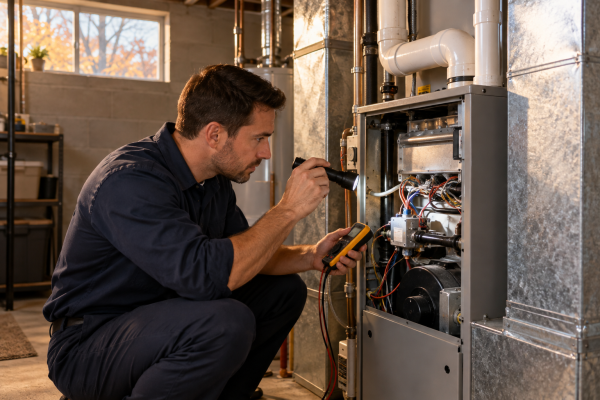
 The first cold night in Atlanta has a way of arriving all at once. Your heat sat untouched all summer, and then one evening after Halloween you turn it on and the house just won’t warm up. Before you assume the worst, there are a few safe things you can check yourself — and a few warning signs that mean it’s time to call a professional.
EcoMech provides heating repair, maintenance, and system replacement across Atlanta and the south metro, for gas furnaces, air-source heat pumps, and geothermal systems. If your home isn’t heating and you’d rather skip straight to a fix, call us at (678) 855-8140 or email service@ecomech.net.
Start with These Safe Checks
Most “no heat” calls at the start of the season come down to a handful of simple things. Work through these first:
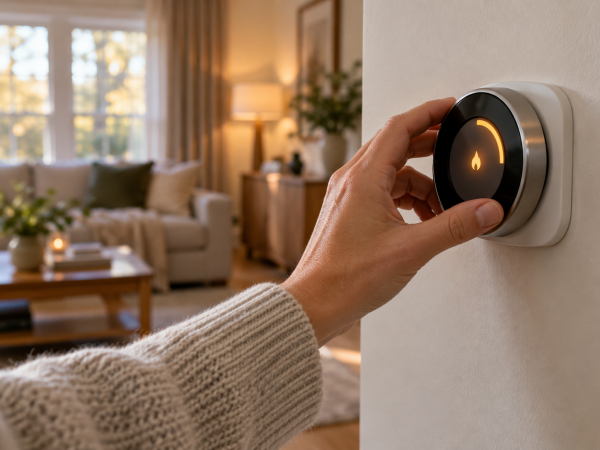
- Thermostat: Make sure it’s set to Heat and the target is a few degrees above the current room temperature. Check that a schedule or “away” setting isn’t holding it low, and replace the batteries if it has them.
- Breaker: Check your panel for a tripped breaker to the furnace, air handler, or heat pump. Flip it fully off, then on.
- Air filter: A clogged filter chokes airflow and can shut a system down on a safety limit. If it looks gray and packed, replace it — this alone fixes a surprising number of heating problems.
- Vents and registers: Make sure supply vents are open and not blocked by furniture or rugs.
- Furnace switch and door: Many furnaces have a light-switch-style power switch nearby, and a door safety switch that must be fully closed for the unit to run.
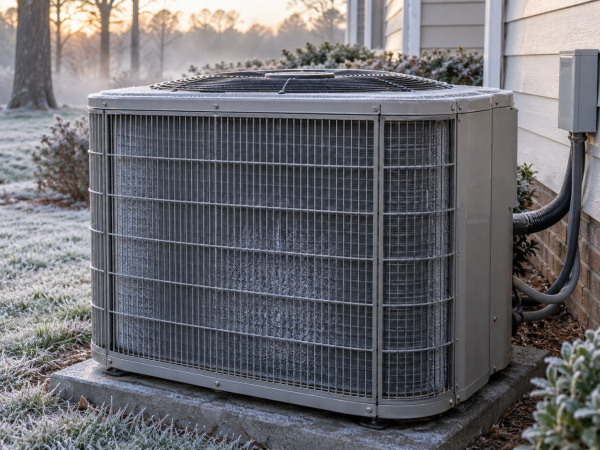
- Outdoor unit (heat pumps): Clear away leaves, mulch, or debris, and make sure the unit isn’t iced over or buried.
 If everything above looks right and the house still won’t heat, the next steps depend on whether you have a gas furnace or a heat pump.
If You Have a Gas Furnace
A gas furnace that sat idle all summer sometimes needs a moment to come to life — but it should come to life. Here’s what’s normal and what isn’t.
A faint burning smell the first time you run the heat is usually just dust burning off the heat exchanger, and it should clear within 15–20 minutes. What is not normal: the burner never ignites, it lights then shuts off after a minute or two (short-cycling), or the blower runs but only pushes cool air.
Safety first — please don’t ignore this: if you ever smell gas or a “rotten egg” odor, do not flip switches or hunt for the problem. Leave the house and call your gas utility and 911 from outside. And make sure you have working carbon monoxide detectors — a cracked heat exchanger can leak CO, and it’s the one furnace problem you can’t see or smell. If a CO detector sounds, get everyone outside and call for help.
For everything short of that — no ignition, short-cycling, cold air on a call for heat — those point to things like a failed igniter, flame sensor, control board, or a safety limit doing its job. Those are quick diagnostics for a technician and not worth guessing at.
If You Have a Heat Pump
Heat pumps are excellent in Atlanta’s mostly mild winters, but they behave differently from a furnace, and a lot of “heat pump not working” calls are actually the system working as designed. A few things that are normal:
- Cooler air at the vents: A heat pump delivers warm air that’s cooler than a gas furnace’s — often around body temperature. It warms the house steadily rather than in hot blasts, so it can feel lukewarm even when it’s doing its job.
- Longer run times: On a cold day a heat pump runs longer and more often. That’s expected and efficient.
- The defrost cycle: When it’s near freezing, the outdoor unit briefly switches to melt frost off its coil. You may see steam, hear a whoosh, and feel the indoor air cool for a few minutes. This is normal.
What’s not normal: truly cold air on a call for heat, the outdoor unit not running at all, ice that never melts and keeps building, or the system constantly falling back to auxiliary/emergency heat (you may notice a jump in your electric bill). Those are worth a diagnostic.
One tip: use Emergency Heat only as a short-term backup if the heat pump fails — it runs on more expensive backup heat and isn’t meant for everyday use. If you’ve had to switch to it, call us.
Warning Signs You Shouldn’t Ignore
Call for service if you notice any of these — they tend to get worse, not better, once the system is running every day:
- No heat at all, or only cold air when the thermostat is calling for heat
- The system turns on and off every few minutes (short-cycling)
- A burning smell that lasts longer than the first 15–20 minutes, or any electrical/“hot plastic” smell
- A breaker that keeps tripping
- Loud banging, grinding, or screeching
- Ice building on an outdoor heat pump that never clears
- Heating bills climbing for no obvious reason
- A gas smell or a carbon monoxide alarm (leave and call for help immediately — see above)
Why the First Cold Snap Exposes Problems
There’s a reason heating systems fail on the first cold night rather than in the middle of winter. All summer, the heating side sat idle while the cooling side worked hard. Igniters weaken, capacitors age, flame sensors get dirty, and small issues hide until the system is suddenly asked to run for hours. The first hard call for heat is simply the moment those weaknesses show up — which is exactly why a fall tune-up catches so many problems before they become a cold-house emergency.
Is It Time to Repair — or Replace?
If your furnace or heat pump is 15 years or older, has needed repeated repairs, or struggles to keep the house comfortable, the first cold snap is a good moment to think beyond a quick fix. Fall is the ideal time to plan a system changeout — you avoid the dead-of-winter scramble, and you can weigh your options calmly.
For many Atlanta homes, replacing an aging furnace-and-AC pairing with a modern high-efficiency heat pump means better year-round comfort and lower bills. For larger or custom homes, geothermal is worth a conversation — it’s the most efficient option available and the one EcoMech is best known for. We’ll tell you honestly whether a repair makes sense or whether a changeout is the smarter money.
When to Call EcoMech
Call or email us if your home isn’t heating, your system is doing any of the warning-sign behaviors above, or you simply want it checked before winter settles in:
- Call: (678) 855-8140
- Email: service@ecomech.net
- Schedule online: ecomech.net
EcoMech serves homeowners across Atlanta and the south metro — including Buckhead, Sandy Springs, Decatur, Druid Hills, Fayetteville, Peachtree City, Newnan, Serenbe, Palmetto, and the surrounding communities — with heating repair, maintenance, and system replacement for gas, heat-pump, and geothermal systems.
Frequently Asked Questions
Why is my furnace blowing cold air?
Common causes include a thermostat set to the wrong mode, a clogged air filter, a pilot or ignition problem, or a safety limit shutting the burner down while the blower keeps running. Try the safe checks above; if cold air continues on a call for heat, have it diagnosed.
Why does my heat pump blow lukewarm air?
That’s usually normal. Heat pumps deliver warm air that’s cooler than a furnace’s and heat the home gradually. If the air is truly cold, the unit won’t run, or it keeps falling back to emergency heat, it needs service.
Is it normal for my furnace to smell when it first turns on?
A light dusty or burning smell on the first run of the season is typically dust burning off and should clear in 15–20 minutes. A persistent, electrical, or gas odor is not normal — shut it down and call for help.
Should I repair or replace an old furnace or heat pump?
If the system is 15+ years old, needs frequent repairs, or can’t keep you comfortable, replacement is often the better value — and fall is the best time to plan it. EcoMech can give you an honest repair-vs-replace recommendation.
Who do I call for heating repair in Atlanta?
EcoMech provides heating repair, maintenance, and replacement across Atlanta and the south metro. Call (678) 855-8140 or email service@ecomech.net.
Yes! We also install and bid Commercial & Industrial Geothermal Systems
Learn More About Our Programs, Coupons & Savings
Sales & Service 678-855-8140
